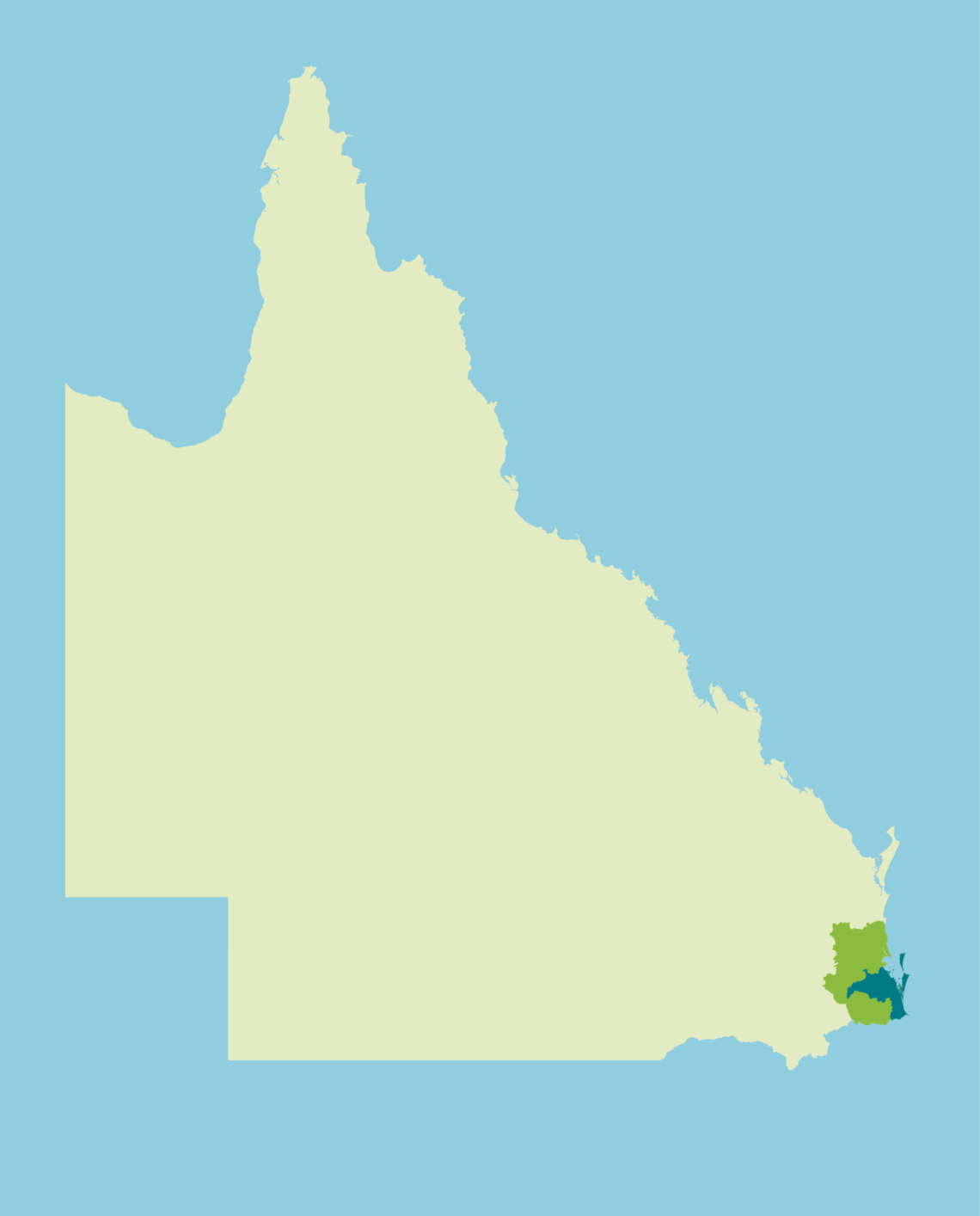
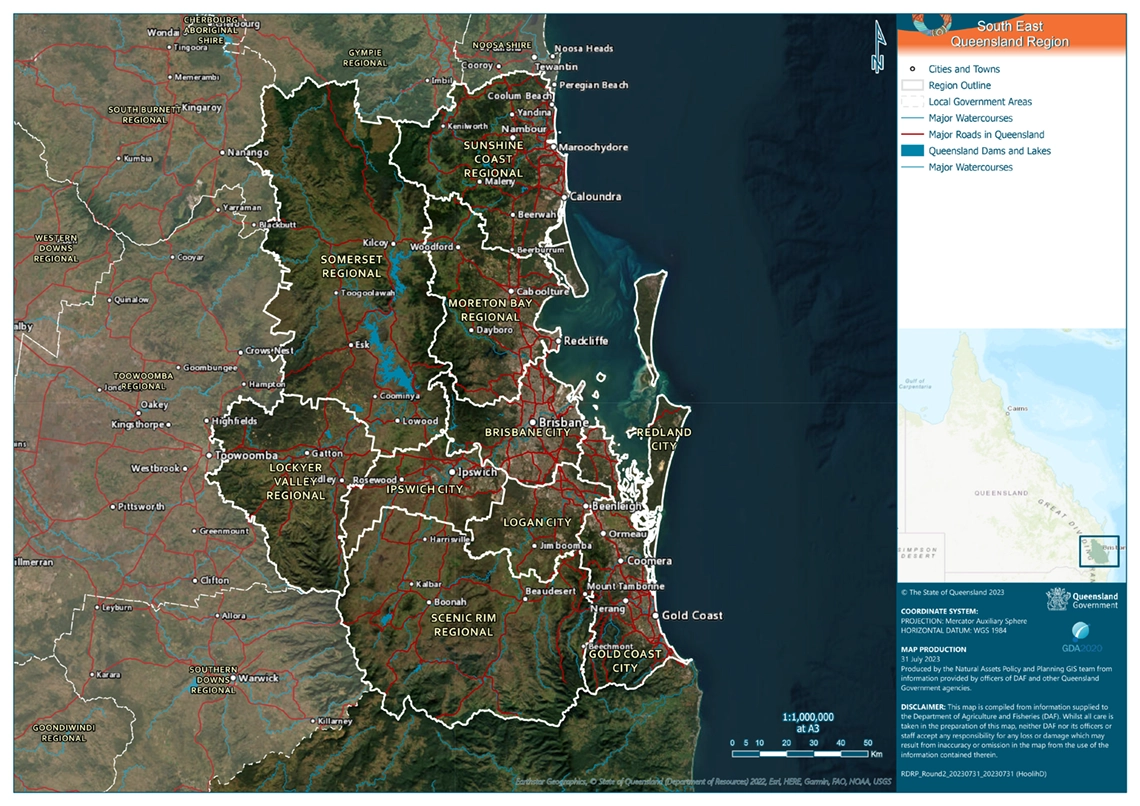
The broad South East Queensland (SEQ) region assigned in Queensland’s RDRP program is shown in the map below. The region comprises the 10 Local Government Areas (LGAs) of Sunshine Coast, Somerset, Moreton, Brisbane, Redlands, Ipswich, Lockyer Valley, Scenic Rim, Logan and Gold Coast.
According to recent Queensland government publications, the SEQ region is home to 3.8 million people, or one in seven Australians, and the population is expected to increase by over 1.58 million people by 2041. The region employed 1.92 million people in 2020 and projected employment in 2041 is expected to rise to 2.62 million.
The area designated as ‘SEQ’ can be divided into three main topographic regions, namely:
the coastal zone, dominated by Moreton Bay, its sand islands and coastal plains;
the major river floodplains and estuaries;
and the hinterland foothills and mountains.
Past impacts of drought in this region
Past impacts | People, culture & community
EXTRACTS FROM THE FULL RDRP PLAN
Image: Bli Bli, Sunshine Coast Region, Queensland
Having strong, healthy and vital communities is central to building drought resilience in the region. The strength and health of the economy and landscape is intrinsically linked to that of the people and their communities. Community feedback, government reports and statistical evidence all point to a decline in the health and vitality of people and their communities during times of drought.
“The community has become so
fragmented from the compounding
impacts of multiple disaster events over
the last few years.”
Urban impacts
The compounding effects of disasters has had significant impacts on the region, leading to exacerbation of existing and underlying issues and inequalities within communities.
Additional stressors including cost of living increases and unforeseen financial burdens have previously seen mental health impacts rise across the region.
Brown and dying landscapes have also been known to negatively impact the community as some feel like they are unable to escape the reality of what is occurring around them.
Rural impacts
Drought exacerbates chronic stresses and underlying issues such as legal and financial problems; medical and health problems; alcohol and substance abuse; isolation and social withdrawal; breakdown of relationships and in the worse cases, self-harm and suicide.
These individual stresses, in turn also influence (and are influenced by) the collective wellbeing effects on communities and landscapes – in effect, drought can create a vicious cycle of stress and decline in mental health.
Past impacts | Economy
EXTRACTS FROM THE FULL RDRP PLAN
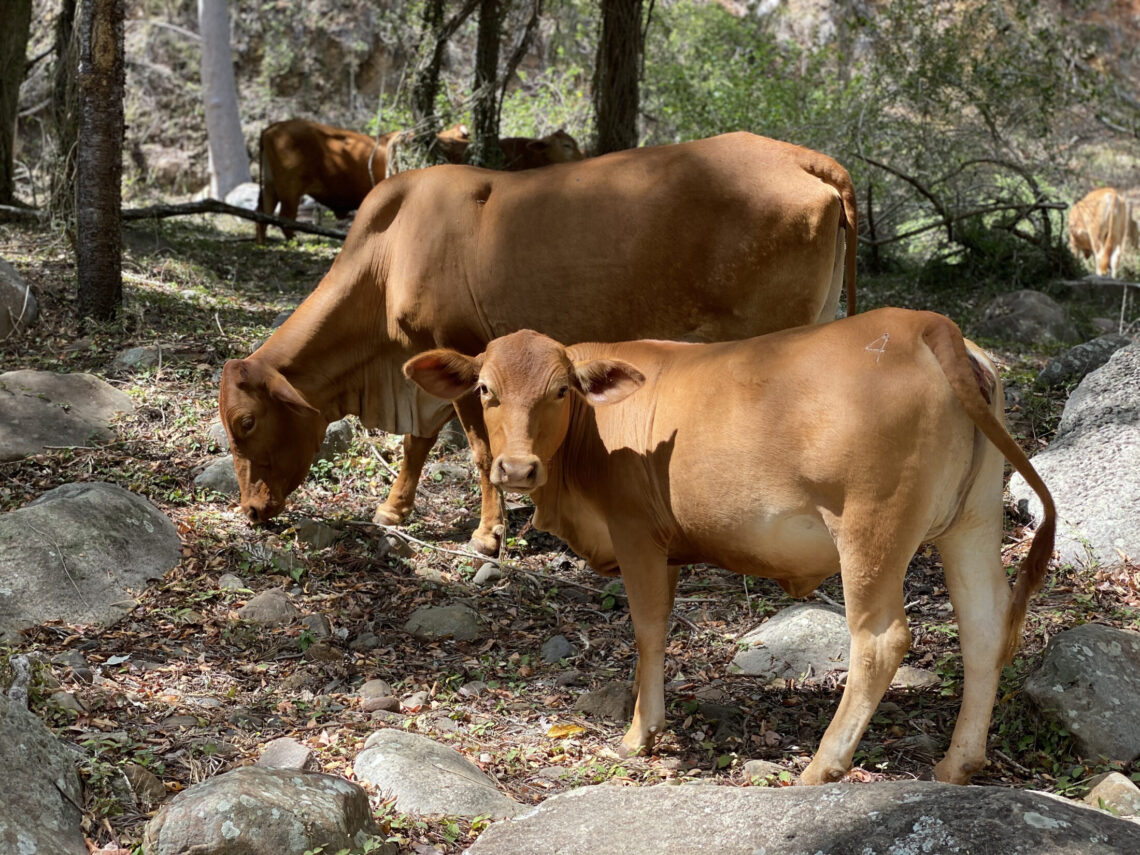
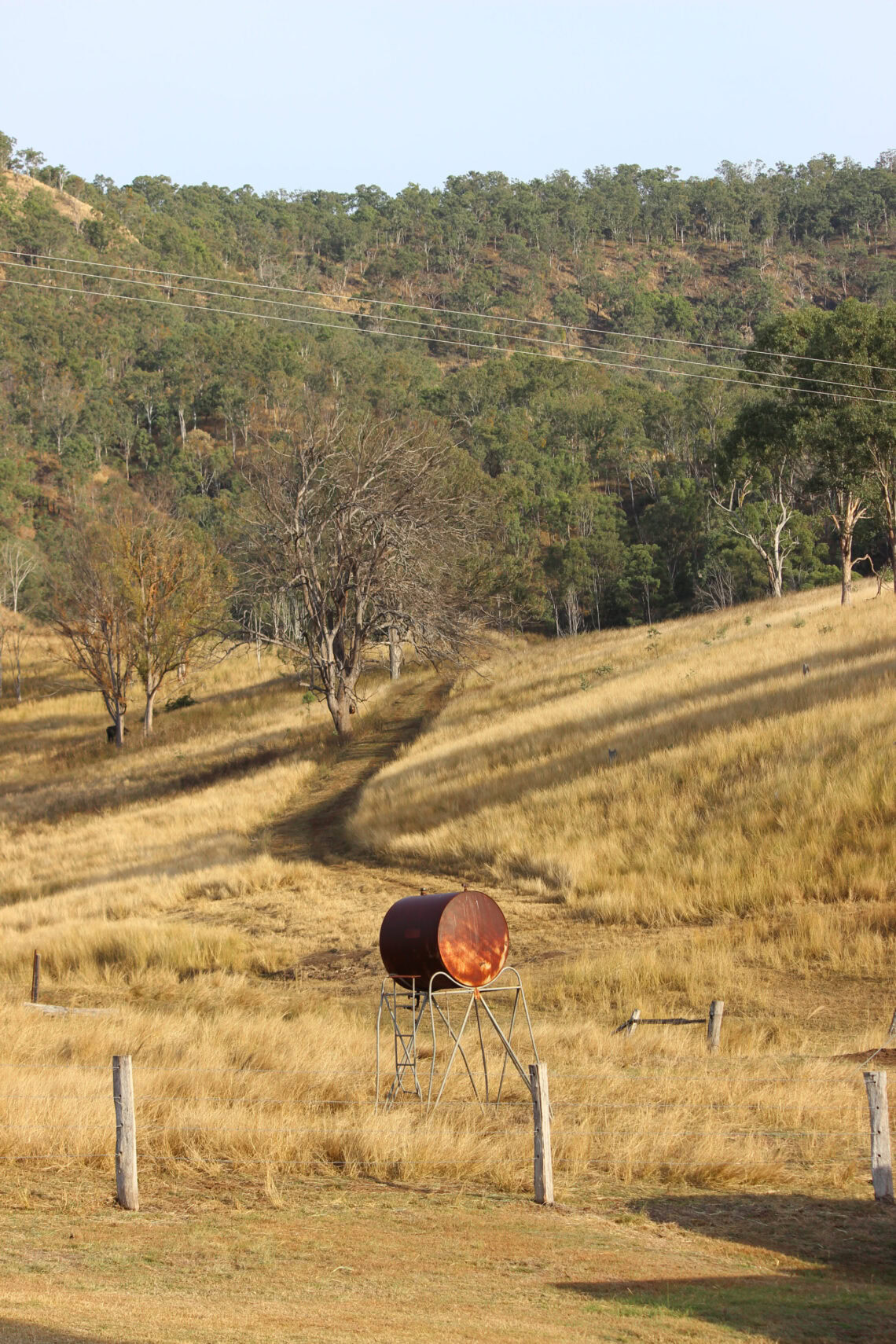
Image: Cattle near lake Moogerah, Queensland
Within South East Queensland urban areas, the impacts of drought—and associated climate risks—have created observed impacts. Considering the impacts of drought across different pillars, CSIRO argues that we must understand all potential aspects. CSIRO proposes a model for understanding the impacts at individual sectoral and systems dimensions. However, there are currently no detailed reports that analyse and discuss comprehensively on the economic costs of drought across SEQ – and particularly in the urban areas.
In the key SEQ rural LGAs — Somerset, Sunshine Coast, Moreton Bay, Lockyer Valley, Ipswich and Scenic Rim — agriculture and agricultural supply chain businesses form a far more significant percentage of economic activity and output, and hence our engagement produced more specific evidence of the economic impacts of drought. Not surprisingly, the correlation between average rainfall patterns and economic output in these LGAs is more profound.
“Droughts are not about water…they
are about economics.”
Past impacts | Landscape and Natural Environment
EXTRACTS FROM THE FULL RDRP PLAN
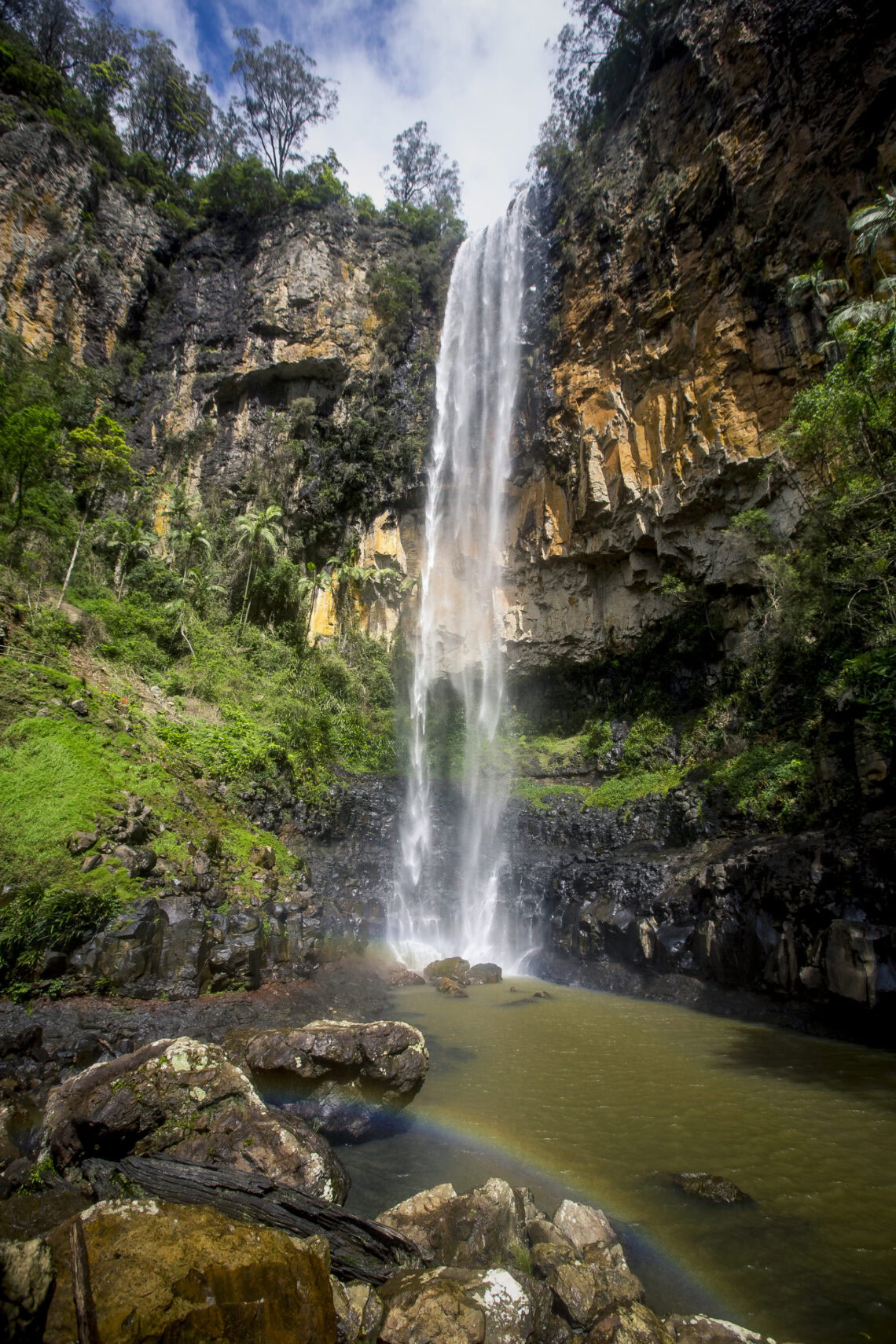
Image: Purling Brooks Falls, Queensland
Drought has impacts across all kinds of landscapes – both urban and rural. The SEQ prides itself as a green region and even in urban areas, the impacts are most noticeable through the condition decline of parks, green spaces, effects on native animals and even home gardens. In rural areas the landscape impacts are more varied and complex.
Urban
Increased hazard risk to the surrounding communities and wildlife, as vegetation dries out and becomes a potential fuel source for bushfires.
Increased sediment, nutrients and other pollutants have previously impacted water quality for the region, which has been known to be exacerbated by periods of heavy rainfall and flooding following long periods of drought.
Soil erosion has also been known to be problematic during drought events, resulting in a decline in plant growth and vegetation cover.
Other impacts have also included damage to road assets and buildings, including cracked pavement and seal.
Rural
The impacts of drought on terrestrial and aquatic fauna and flora populations are well documented for some species and evolving for others.
Biosecurity issues are heightened during times of drought – often farmers import fodder from other regions to hand feed stock.
During times of drought, opportunistic weeds, pests, and feral animals become an increasing problem.
“Elders have reported changes to the natural landscapes and water ways, which has never been seen before.”
Past impacts | Infrastructure and Built Environment
EXTRACTS FROM THE FULL RDRP PLAN
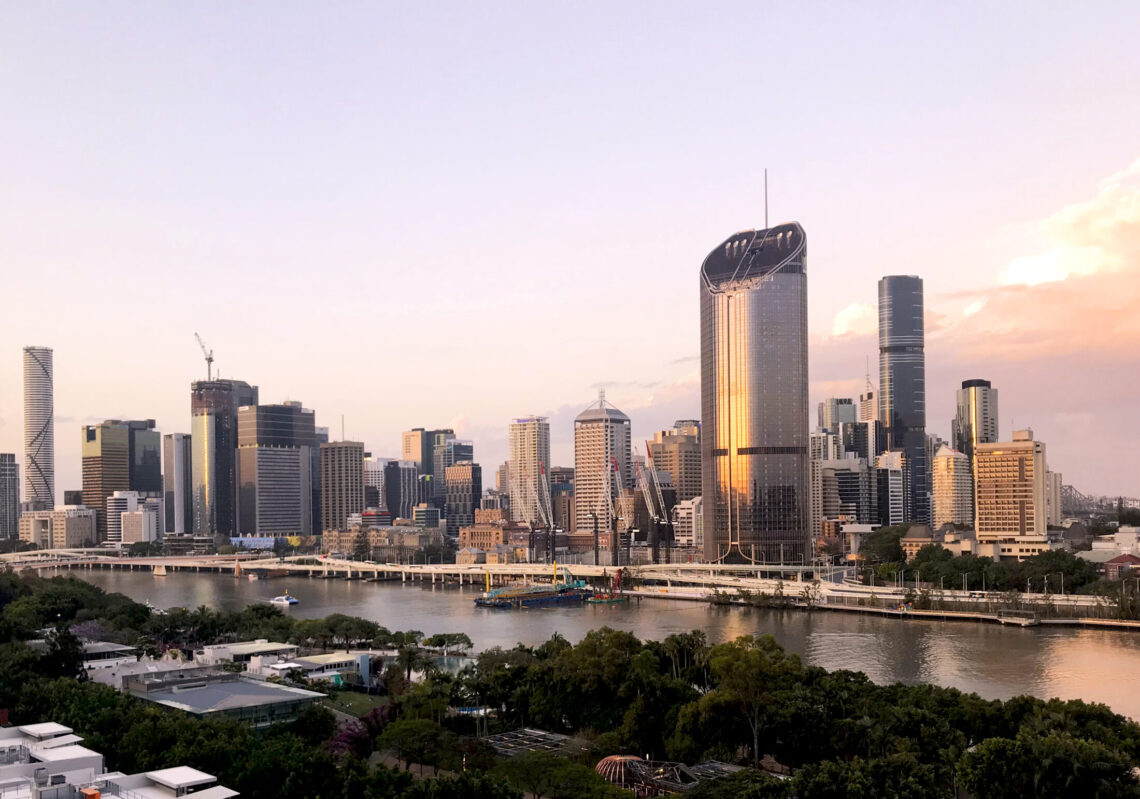
Image: Brisbane CBD, Queensland
For some physical infrastructure, increased heat and little or no moisture can have significant impact on their condition (i.e. road surfaces, wooden and metal structures, painted surfaces, earthen-based structures, etc). For most infrastructure, the most significant impacts of drought come from:
lack of funds for infrastructure investment and/or maintenance,
decrease in available (or able) personnel to carry out construction and/or maintenance.
“Long-term strategic decisions about
water infrastructure need to be factored
into planning.”
On-site and farm improvements or maintenance are often neglected, avoided or postponed and the upkeep of community infrastructure is sometimes neglected or abandoned. Drought frequently causes a reduction in investment (both public and private) in new infrastructure in rural and regional townships – in particular, the availability of affordable housing (new or existing) declines.
While drought has little or no direct impact on digital connectivity, the most recent droughts highlighted the lack of digital connectivity even in SEQ, and the flow-on effects on other drought impacts. Many government support or relief programs often require online applications and/or the proficient use of computers to access forms or information. Even many mental health and counselling services were forced to implement telehealth sessions via the internet as their first option. During our engagements, many people remarked how their general community connectivity and their access to services decreased during the drought, as they were faced with either having to access online (sometimes impossible and often problematic in the many SEQ ‘blackspots’) or faced a long drive to the nearest regional service centre.
Drought impacts on infrastructure in the rural areas of SEQ mainly focus on four issues:
impacts on community water storage, supply and management infrastructure,
impacts on community infrastructure (particularly that associated with health and wellbeing),
impacts on ‘on-farm’ water storage, supply and management infrastructure, and
impacts on other infrastructure related to transport, digital connectivity and even drought monitoring and measurement.
Likely future impacts of drought in this region
Future impacts
EXTRACTS FROM THE FULL RDRP PLAN
In 2019, the Queensland government produced the factsheet Climate Change in the South East Queensland Region. Using data from CSIRO, BoM and modelling from international body CMIP, they made the predictions for SEQ.
Under both a low and high emissions scenario, the mean temperature is predicted to rise consistently across the SEQ rural LGAs. The Lockyer Valley and Scenic Rim LGAs will likely experience the greatest decline in annual rainfall in the short and long term. Under a high emissions scenario, rainfall is predicted to increase in the short term but reduce in the medium to long term.
The South East Queensland Water Security Program 2023 states: “If the climate-related impacts were to occur gradually over the next 30 years, the modelling indicates the existing (Seqwater) system could only sustain enough water supply to meet the desired level of service objectives until sometime between 2027 and 2032, depending on future water demands. It is important to note this does not mean SEQ will run out of water, but the reserve for severe drought is reduced.”
Regional strategy
Regional strategy | People, culture & community
EXTRACTS FROM THE FULL RDRP PLAN
Projected outcomes
Plan for drought responses, implement drought monitoring and early warning systems.
Equitable access to water and reducing risk to vulnerable communities.
Improved coordination and collaboration across sectors and improved monitoring and reporting for regional resilience.
Projected outcomes
Manage responses during drought by dealing with impacts, vulnerability and risk.
Improved community mental and physical health during drought events by increasing individual and community capacity to respond.
Projected outcomes
Implement resilience measures to limit future impacts of drought and better respond to drought.
Viable communities linked and resilient to stressors and shock periods.
Improved collaboration across sectors for regional resilience.
Improved health and wellbeing outcomes from healthy country and waterways.
Preservation of indigenous cultural site.
Regional strategy | Economy
EXTRACTS FROM THE FULL RDRP PLAN
Projected outcomes
Plan for drought responses, implement drought monitoring and early warning systems.
Improved resilience of local businesses to the impacts of drought and compounding events including bushfires and heatwaves.
Reduced risk to local businesses and cost risk to local Councils.
Projected outcomes
Manage responses during drought by dealing with impacts, vulnerability, and risk.
Viable communities linked with thriving economies through stressors and shock periods.
Projected outcomes
Implement resilience measures to limit future impacts of drought and better respond to drought.
Improved coordination and regional governance of economic diversification development for drought resilience.
Reduced risk of human impacts on landscapes and improved productivity and flow on economic impacts.
Improved resilience of local businesses to the impacts of drought and compounding events including bushfires and heatwaves
Regional strategy | Landscape and natural environment
EXTRACTS FROM THE FULL RDRP PLAN
Projected outcomes
Plan for drought responses, implement drought monitoring and early warning systems.
Improved environmental resilience through coordination, collaboration and actions across sectors.
Projected outcomes
Manage responses during drought by dealing with impacts, vulnerability and risk.
Projected outcomes
Implement resilience measures to limit future impacts of drought and better respond to drought.
Improved water quality across the region and increased protection of water through sustainable water practices.
More efficient use of water and natural resources in the urban environment.
Regional strategy | Infrastructure and built environment
EXTRACTS FROM THE FULL RDRP PLAN
Projected outcomes
Plan for drought responses, implement drought monitoring and early warning systems.
Reduced cost of water and flow on benefits from water security.
Projected outcomes
Manage responses during drought by dealing with impacts, vulnerability and risk.
Projected outcomes
Implement resilience measures to limit future impacts of drought and better respond to drought.
Improved coordination and collaboration across governments to achieve water security.
More efficient use of water and natural resources and investment into new sustainable industries.
Take a whole of region approach...
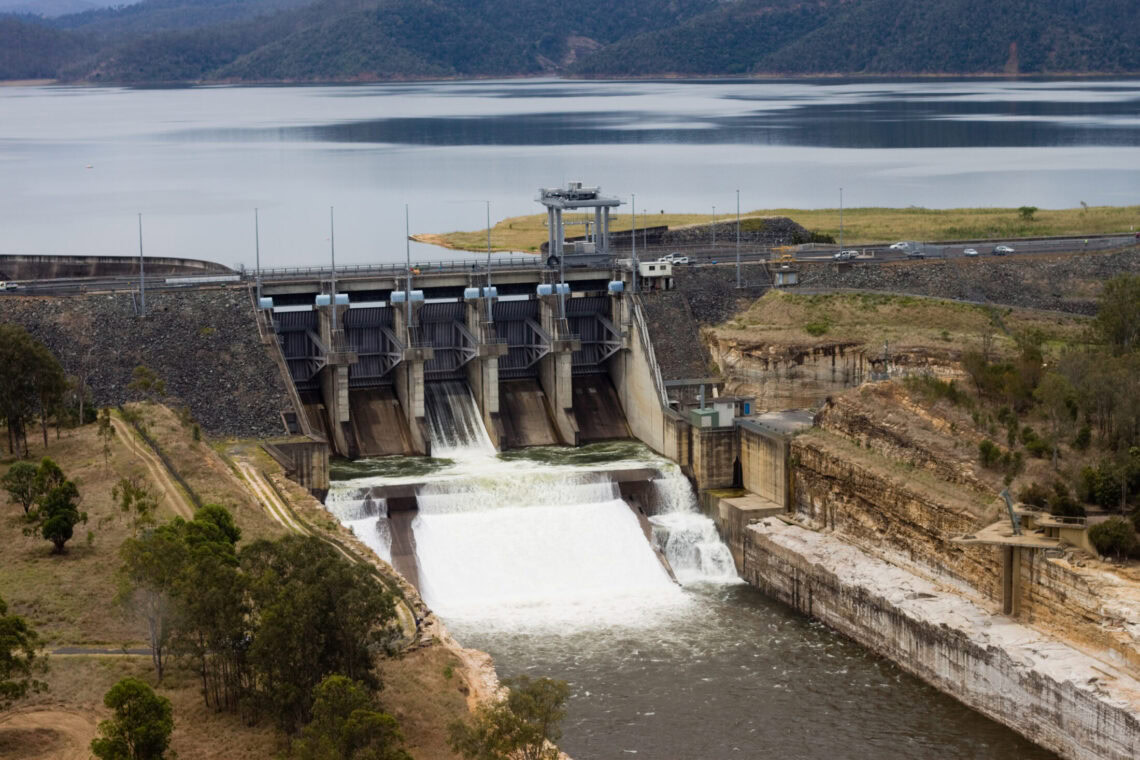
Image: Wivenhoe Dam spillway near Brisbane, Queensland Australia.
Take a whole of region, multi-stakeholder approach to water security planning in SEQ.
Increased temperatures, seasonal rainfall variability, and increased evaporation require long term water security planning. Incorporating climate change considerations into water planning requires a whole of region multi-stakeholder approach. In the context of SEQ, climate impacts are likely to be coupled with water demand pressures arising from increased population projections.
The challenges for water security include water sources, water capture/storage and levels of service (managing demand) across different SEQ areas. Three levers exist to secure water during drought including reducing demand, contingency supply and augmenting and diversifying water supply sources. Land use planning and land management as well as energy sources are critical to water security. Consultations identified that water security was a priority concern relating to drought and climate change and that more engaged coordination and planning mechanisms were needed.
Working together was identified as being a critical factor in assessing, planning and taking action for long term water security for SEQ region.
Build economic resilience...
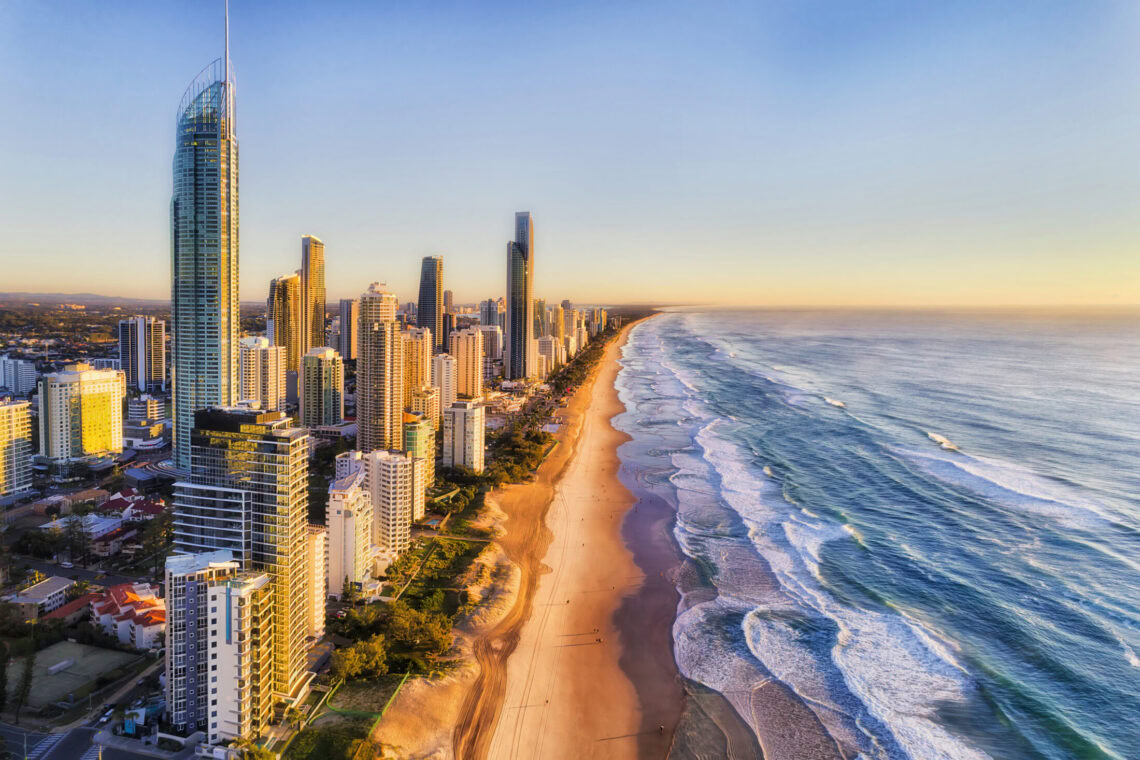
Image: Surfers Paradise, Gold Coast, Queensland
Build economic resilience by supporting economic diversification and adaptation to drought conditions in SEQ.
The SEQ region is the economic centre for Queensland and is an integral part of the supply chain of many regions across the State. The SEQ region generates two-thirds of the State’s GRP. Consultations identified that drought impacts on the local businesses in SEQ both directly and indirectly (flow on from other region’s drought events).
The consultations identified the impacts of drought on diverse industries including businesses such as car wash, recreational and sporting businesses, agribusinesses and tourism. Supporting the SEQ region to thrive and be economically resilient requires significant effort for diversification, recovery and adaptation.
Improve community and industry understanding...
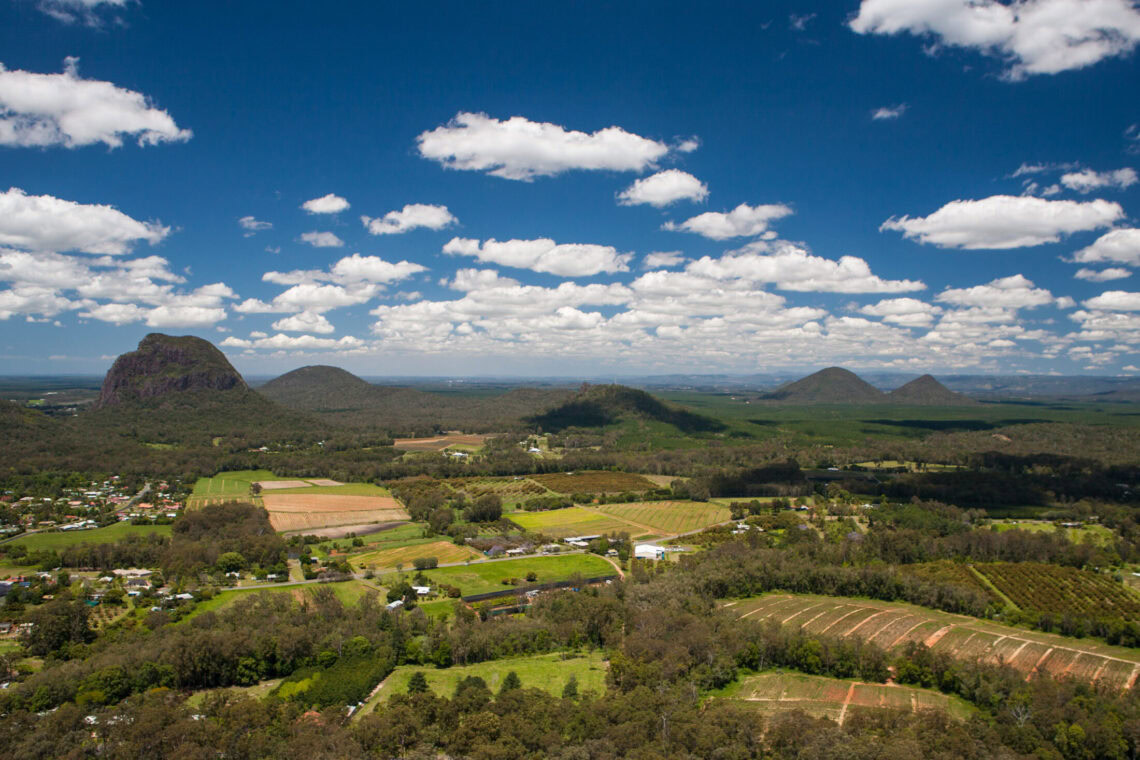
Image: View towards Glass House Mountains National Park, Queensland
Improve community and industry understanding and awareness of drought in SEQ.
Drought awareness and understanding is a critical first step in drought resilience. While many residents and businesses have experience of past droughts, the SEQ region has had significant population growth from other parts of Australia and overseas. Additionally, in 2021/2022, there were approximately 26,000-day trips from domestic tourists and 42,000 visitor nights from international and domestic tourists into the SEQ urban region.
These population groups are often unaware of the climatic conditions in SEQ and ways to mitigate the impacts of drought conditions such as heatwaves. In addition, Traditional Owner groups raised concerns that cultural considerations and generational knowledge are not well understood or considered in drought and risk mitigation policy and planning. Consultations also revealed that there was a degree of complacency in relation to drought with factors such as frequent floods leading to perceptions that there is no risk of drought. Effective communication, awareness and information strategies are needed to ensure appropriate knowledge and preparedness for drought conditions at individual, household, business and community levels.
Improve social and wellbeing outcomes...
Image: Bli Bli, Sunshine Coast Region, Queensland
Improve social and wellbeing outcomes for community drought resilience.
Drought and multi-hazard stress is experienced at multiple levels including at a personal and community level. The impacts of drought are environmental, social, cultural and psychological. Mental health and wellbeing during drought emerged strongly as a theme during the consultation and was articulated by the majority of stakeholders consulted. Water scarcity, bushfire threats and heatwaves stress compound the effects of other disasters such as floods. The social impacts of drought in the SEQ urban region that have been identified include financial hardship; social cohesion impacts including conflict; relationship strains; mental health impacts; and physical health challenges.
At the community level the depletion of social capital, volunteering decline and pressures on services were identified. The increase in migration from interstate also meant the level of cohesion did not exist at neighbourhood level. A strong community was seen to be an essential ingredient for mitigating the psychosocial impacts of drought and other disasters. Access to appropriate support services was outlined as being very challenging, often with limited-service options for vulnerable communities. The need for more preventative and acute health care arrangements were identified. Collaborative, place-based health and community resilience planning were seen as priorities. Supporting the capacity of community organisations and service providers in the SEQ region to ensure accessibility of support and services is fundamental to being drought resilient into the future.
Manage land and natural assets...
Image: Purling Brook Falls, Springbrook National Park, Queensland.
Manage land and natural assets for drought impacts to conserve ecosystems and vulnerable species in SEQ.
The SEQ region is one of the most diverse bioregions in Australia and contains unique urban, peri-urban and rural ecosystems which face threats and challenges. Landscape connectivity and ecosystem conservation is critical for the protection of wildlife and flora. First Nations peoples have ongoing connection to land and water and have custodianship of country. Sites of cultural significance for Indigenous communities are negatively impacted by climate events. Soil conditions, water quality and oceans are impacted by cycles of drought and floods, and compounds the impacts on the overall environment.
The built-up environment in the SEQ urban region contains numerous natural systems of creeks, reserves, lakes, and wetlands which struggle during drought. The peri-urban areas of major cities in the SEQ urban region are surrounded by small-scale farming and agriculture. Consultations have shown that these farmers are often neglected in receiving support and information about factors such as drought, land management (including weeds and pests, fire management) and animal welfare (domestic animals and wildlife).
Support regional governance capacity...
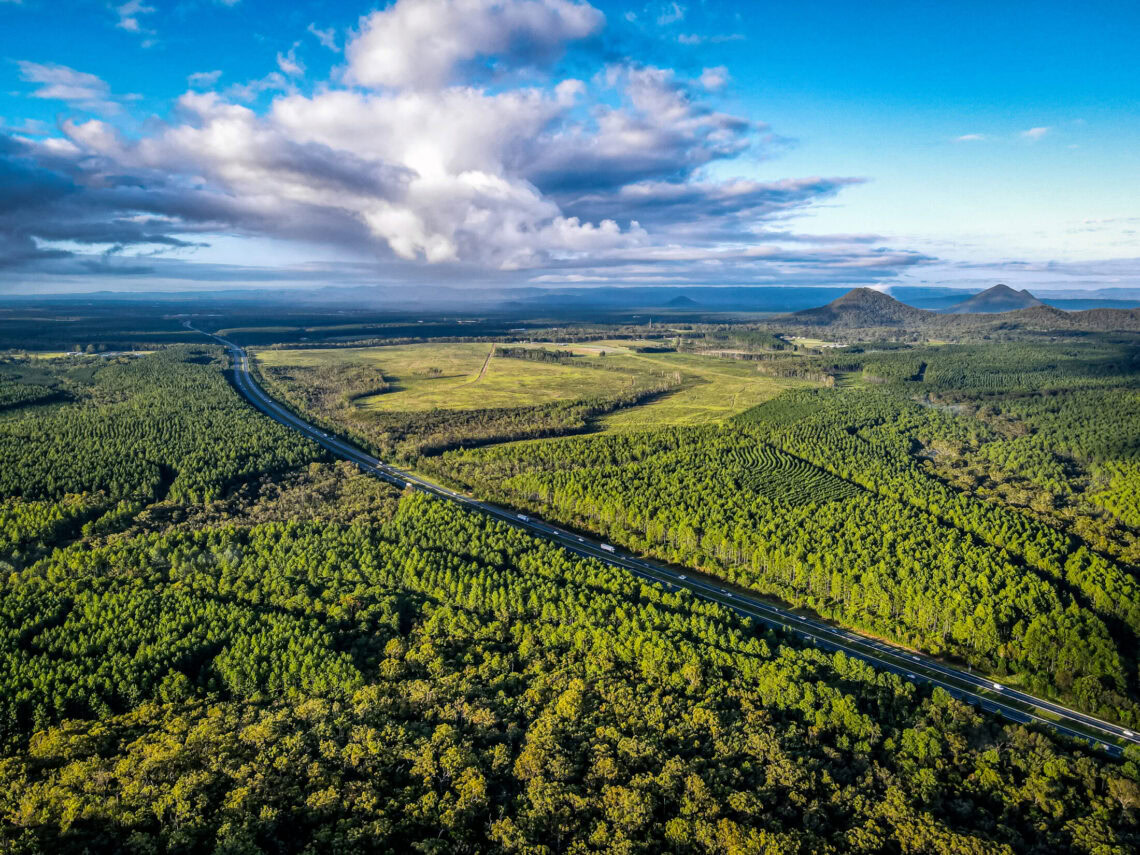
Image: Glass House Mountains and Beerburrum State Forest, Queensland.
Support regional governance capacity to deliver drought resilience in SEQ.
Achieving drought resilience in a complex SEQ urban and rural region demands coordinated efforts across diverse organisational sectors. Essential governance actions include aligning with established climate-resilient strategies and plans, and strategically placing drought resilience within broader regional climate resilience goals. This means building long term capacity in the region and at local government, community service, institutional and property/business levels to enhance drought resilience. In fostering collaboration and strategic governance, the region can effectively address the multifaceted challenges posed by drought, ensuring sustained environmental, social, and economic well-being.
View the South East Queensland Regional Drought Resilience Plan